Decision Fatigue Is Why You Can’t Pick a Netflix Show
Every time anyone asked me questions like “Sea or mountains? Tea or coffee? Cash or card? Stable job or business?” my brain used to freeze like it was stuck in Antarctica. It mostly ended with me thinking, “Do I even know myself?”
There was a time I was hanging out with my best friend and she simply asked, “Do you want a Vanilla latte or an iced Americano?” I yelled at her, because I was convinced she was playing with my mind on purpose. She knew very well I’d drown in the dilemma of being health-conscious versus “YOLO.” So I said, “Just decide for me damn it!”and she ordered a latte with oat milk and vanilla syrup in one beat. It’s crazy how the people around you learn your indecisiveness well enough to know exactly what to say, to trigger you.
I used to brag about being indecisive and let people decide things for me, which always ended with me being taken for granted. Sometimes you actually know what you want, but you can’t say it, because you’ve already built your reputation as “the indecisive one.” But what happens when you’re all alone, with no one around to decide for you?
That’s when I found out I didn’t have an indecision problem. I had decision fatigue — and once I understood what it actually was, almost everything about how I move through a day made more sense.
What Is Decision Fatigue?
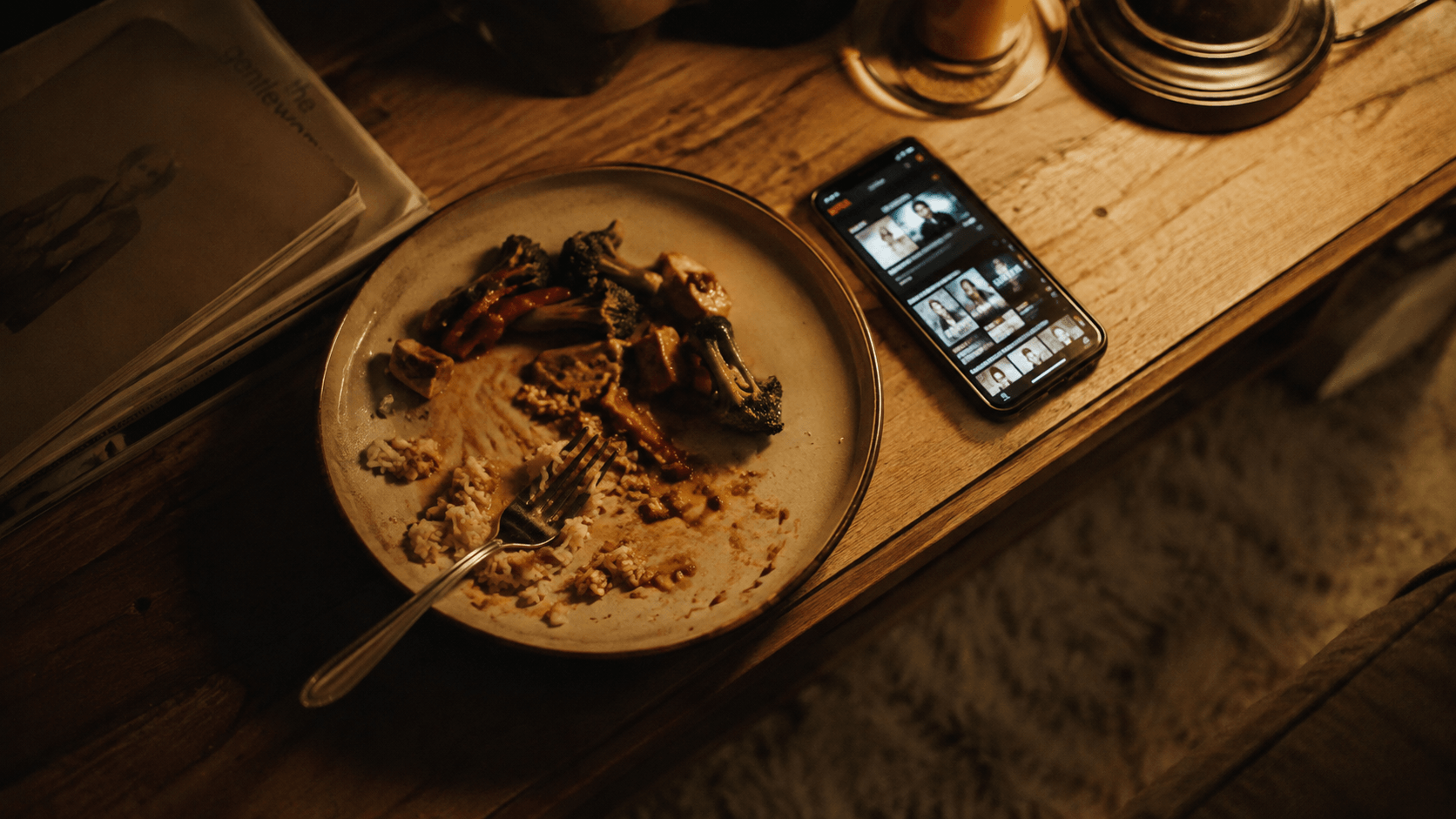
It’s exactly what it sounds like — the fatigue you feel after making decision after decision. By the end of the day, when it’s finally time to Netflix and chill, you sit down with a plate full of amazing food in your hand. But by the time you’ve decided what to watch, the food’s either cold or half gone.
After a long day of decisions, making one more feels like a real task. That’s where the fatigue comes in, and you end up watching the same episode of FRIENDS you’ve already seen five times. Not wanting to think anymore just to decide something — that’s decision fatigue. Once I realized it, I noticed I was feeling it almost every day.
You’re Not Indecisive, You’re Mentally Exhausted
If you’re a sensitive person, mental exhaustion is basically the norm. Agree with me or not, we overthink everything so much that there’s no way it doesn’t exhaust us.
Think about it — why are we indecisive? Do we even think before saying “I am indecisive” in the first place?
You go to a cafe and see ten options on the board. Your brain starts: “I want a frappuccino, but I already decided to cut calories — should I just go with an iced Americano instead?”
“But I already had an iced Americano the entire last week, and I’m craving sugar, and I really want the frappuccino, but I don’t want to break the chain.” By this time, ten customers have ordered, and five of them have already left with their coffee.
After a 20-minute conference call with your brain, heart, and soul, you finally decide on the frappuccino.
The thing is, deep down, you always knew you’d end up with the frappuccino. But the energy you spent thinking, and being “indecisive” about it, is what left you mentally tired.

It’s a subconscious act. You might not even realize you’re doing it — it’s just how you’ve wired yourself. And that’s what leads to mental exhaustion.
Why More Choices Make Choosing Harder
The Paradox of Choice, by psychologist Barry Schwartz, explains this really well.
The more options you have, the more mental work it takes to decide — which is exactly why it took you 20 minutes to order a coffee. You had so many other choices to compare it to. And the fear of making the wrong choice doesn’t go away once you’ve had and sipped the frappuccino — the regret that an iced Americano could have made you more disciplined shows up eventually anyway.
Every decision consumes some cognitive resources. After evaluating too many options, you become mentally exhausted, and you either delay the decision or choose impulsively.
What I’d rather say is: it’s okay to live a little. You can have your frappuccino today. But if you’re having the frappuccino again tomorrow, and the day after — that’s when it starts leading to bigger issues.
How Netflix Became Another To-Do List
It’s a relief when something is trending on Netflix, because you don’t actually have to decide — that’s my personal favourite kind of choice. When Bridgerton Season 4 came out, I watched it with my food still hot, plate still full. But the moment I finished, that feeling of emptiness knocked on my door like a stranger. After that I was back to struggling over “what to watch,” spending another 30 minutes asking ChatGPT for suggestions, which just left me more confused.
Deciding what to watch has actually become its own task, because you don’t want to end up regretting the time you put into it. Has it ever happened to you — you start a show, get halfway through, and end up disappointed? You keep thinking, “That was such a waste of my time,” even though you’re the one who kept watching. And that makes the next decision even harder, because now you’re choosing with that experience hanging over you. The last time I felt like I truly lost hours of my life was watching “Insatiable.” The worst decision of my life.
The Psychology Behind Decision Fatigue
I didn’t know that for the last four years I was a victim of indecisiveness, because I had absolute freedom. There’s an interesting paradox in that: the more freedom you have, the harder it is to make decisions.
Your brain has limited cognitive resources. Every decision requires attention, evaluation, comparison, and self-control. When you ask yourself “which option is better” again and again, you’re demanding more from your executive function. More choices create more mental comparison, and choice overload can make a decision feel harder than it actually is.
What fuels Decision fatigue
Uncertainty makes it worse. Before watching a Netflix show, you’ll watch the trailers and teasers a thousand times just to make sure it’s worth your time — even though the trailer is always going to look interesting, because that’s its whole job. What you can’t know is whether the show will actually deliver. That uncertainty is so tiring that you either go looking for more options, or give up and watch the thing you were still unsure about anyway. Roy Baumeister and his colleagues did classic research showing that making a lot of decisions can lead to what’s called “decision fatigue” and it’s a state where decision-making itself reduces your self-control. Basically, your brain runs out of willpower.
When there are too many possibilities, you spend time deciding which one is best, which leads to weighing a few options, which can spiral into weighing a thousand, until your brain is just asking, “What are you even going to do now?” I’ve been in that spot so many times that I built myself a simple rule: pick three options, then decide between those three. It didn’t make choosing easy, but it made it a lot less hard.
Decision fatigue isn’t always about having too many decisions to make, either. Sometimes it’s the opposite — a feeling that you can’t make a decision at all, because you’re afraid of what you’d have to give up by choosing. That can come from needing to feel perfect about it.
The Real Cost of Endless Scrolling
Not to blame the digital world we live in for everything, but it plays a part. Every second, people are watching millions of videos and billions of reels are getting views, and you’ve got a million things you could watch next. One moment you’re watching something on Instagram, then a dancing video, then a strawberry matcha recipe, then a home decor reel — all in the span of a few minutes. That’s because evolution wired us to seek novelty. The brain stays “hungry.” The more you see, the more you want.
A simple mechanism drives it: you watch something, you like it, you get interested, and you want to know more. Ten minutes in, you’re not relaxing anymore — you’re right back where you started, trying to decide what to watch next. And that’s exhausting in its own way.
So here are a few simple ways I’ve found to beat decision fatigue.
1. Decide Before You’re Tired
Make the deck before you feel exhausted. Pick what you’re watching tonight before you’re tired may be on your commute, on your lunch break.Then, when you get home, you don’t have to think about it anymore, you just get to watch your two episodes of Emily in Paris. You’ve already made the call, so you don’t spend a thousand minutes deciding what to watch.
2. Keep a Personal Go-To List
Write down the things you already know you like — the things you actually enjoy or usually reach for. I made a list like this back in January 2025, and I’ve used some version of it all year:
• Vanilla iced latte — Mondays and Wednesdays
• Iced Americano — the rest of the week
• Salmon salad or sandwich — Mondays and Wednesdays
• Chicken salad or sandwich — the rest of the week
• Whatever’s trending on Netflix — no need to check anything else
• Favourite colour: pink and white (makes shopping easier too), When you’re stuck between choices, stop, breathe for four counts without thinking, then narrow it down to your top three choices. Pick one out of those three.
This list has helped me so much whenever I have to choose. I still get the urge to overthink it, but now I just remind myself I already know what I want. I remake the list every year, because change is inevitable — you can be a different person next year, and that’s a good thing.
3. Lower the Pressure to Choose Perfectly
This is one of the stepping stones toward self-compassion and forgiveness.
The list helps delay the overwhelm, but the fear of making the wrong decision is still unpredictable — that’s just part of it. That’s exactly why the “four breaths and top three choices” rule works as a boundary: it limits your options on purpose. You can make an imperfect choice and still be okay with it. Choose to live with yourself. Worth trying.
4. Let “Good Enough” Be Good Enough
This is the real mindset shift. Be proud of how far you’ve come — from wasting 20 minutes deciding something to just making peace with the fact that whatever you decide is good enough. Now, when I start a Netflix show and don’t like it, that’s fine. I leave it halfway, take whatever I got out of it, and move on. It was “good enough,” just not for me — and that’s okay, because I made the decision and I don’t have to keep retrying it. That’s life, nothing is certain here. Life is uncertain, and the people who actually learn to live with that tend to be the happiest ones. So let it be “good enough,” and move ahead.
It’s Not About Netflix or Coffee — It’s About Modern Life
After I left my job as a flight attendant and moved back home to live with my parents, it was a drastic change for me. I’d gone from living alone for four years straight to suddenly living with five other people, including my siblings.
So I asked my parents if we could get away from city life for a while and stay at our farmhouse, way out in the countryside.
It was a good decision, because what I learned there is something that’s stayed with me. In the city, you have countless options for everything you crave — you search online, find a thousand cafes, and get stuck deciding which one is best. In the countryside, you don’t really have choices at all. You learn to work with whatever that is available at that moment around you, which is closer to what humans are wired for in the first place.
While I was at the farmhouse, I was craving matcha. Obviously, there was none. So my brain started looking for something that could kill the craving instead, and I ended up in the field with my parents, picking fresh tea leaves. I remember exactly how that tea tasted. It still lives on my tongue, and strongly in my mind.
Modern life produces decision fatigue by design. We can’t control the world other people built around us, or the one they’re still building.What you can control is your own mind.

One Small Change That Made Life Feel Relaxing Again
No matter how hard you try to separate your personal and professional life, after a long day you’ll still end up thinking about work. Your brain has countless thoughts running, and somewhere in the middle of it you start asking yourself: What should I eat? What should I post today? What should I watch? Before you’ve even answered one, the next one shows up.
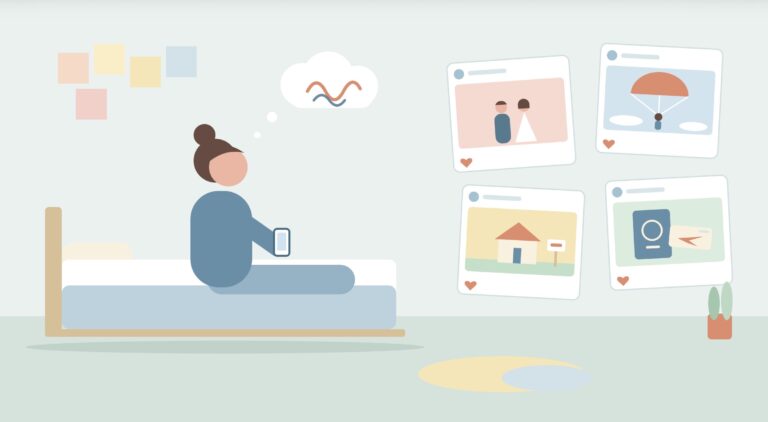
All of this after a full day of work — no wonder you end up more exhausted, because what you’re supposed to do after a long day is relax, and at this point we don’t even really know how to do that. I used to think coming home and scrolling mindlessly was relaxing. It wasn’t. It was a big part of why I was dealing with stress, anxiety, depression, and decision fatigue in the first place. What actually helped was one small change.
After getting home from work, I stopped using my phone for one straight hour. “What should I eat” got decided without me scrolling a food delivery app. “What should I post today” stopped mattering, because I wasn’t scrolling for ideas. And “what should I watch” was already decided before I even left for work that morning. It worked out so well. Try it — it might be just as life-changing for you.
Final Thoughts
We live in a world where almost everything is a choice, and we’re constantly told that having more options means having more freedom. In reality, it’s often the opposite.
The more decisions we make, the more mental energy goes into comparing, questioning, and wondering if what we chose was “good enough.” We can’t escape that — the world isn’t going to stop generating options. What we can control is our own thoughts, and the decisions we make for ourselves.
The goal was never to make the perfect decision. It’s to make sure the decision is actually yours, not driven by something outside of you. A calm life isn’t about controlling every possible choice.
It’s about knowing which choices deserve your attention, and letting the rest run on its own.





One Comment