How to Protect Your Attention in 2026 (10 Simple Ways)
What if your ability to focus becomes the single most valuable skill of the next decade?
Every app on your phone is designed to pull at your attention. For the newest generations, I’d argue Instagram is winning that fight outright.
According to researcher Dr. Gloria Mark of UC Irvine, who has tracked screen attention for over 20 years, the average attention span on a screen has fallen to around 47 seconds — down from roughly two and a half minutes when she began measuring it in 2004.
And if you try to step away from your devices to do real, deep-focus work? Most people can hold that for somewhere between 45 and 90 minutes before their mind starts to drift.
The scary question isn’t where we are. It’s how much lower this number can go.
Protecting your attention in 2026 isn’t a nice-to-have anymore — it’s survival. Here are 10 practical ways to do it.
Why Attention Is the New Currency

It’s 2026, and we’re drowning in information. Every website, every app, every creator is fighting for the same limited resource: your attention.
Social media algorithms are built to grip that attention and keep you hooked until you’re exhausted enough to put the phone down and sleep.
To survive in this attention economy, you need a system.
Here are the 10 habits I rely on.
1. Turn Off Non-Essential Notifications
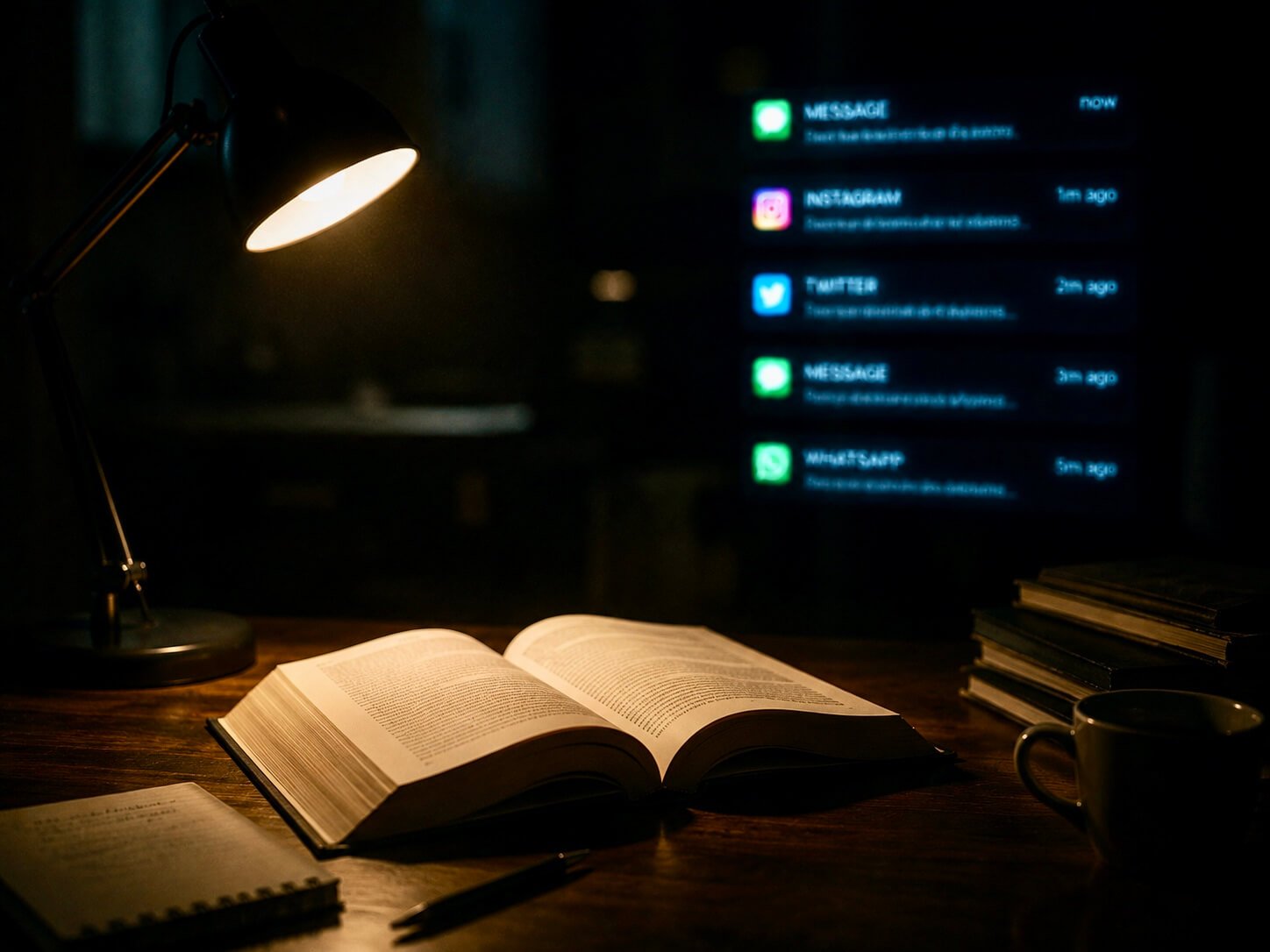
Notifications are where distraction begins. Imagine you sit down to read or study for 50 focused minutes — but you forgot to put your phone on silent. A notification pops up: “Amazon sale ends in less than 2 hours.”
It takes less than two seconds for your attention to jump from the most productive part of your day to the most regrettable.
So unless you actually want to save a few dollars on a flash sale, turn off non-essential notifications — at least before any session where you need to focus.
2. Create Phone-Free Zones
The fastest way to regain deep focus is to build phone-free zones. Your environment shapes your behavior more than your willpower does — this is well established in behavioral psychology’s research on environmental cues and habit formation.
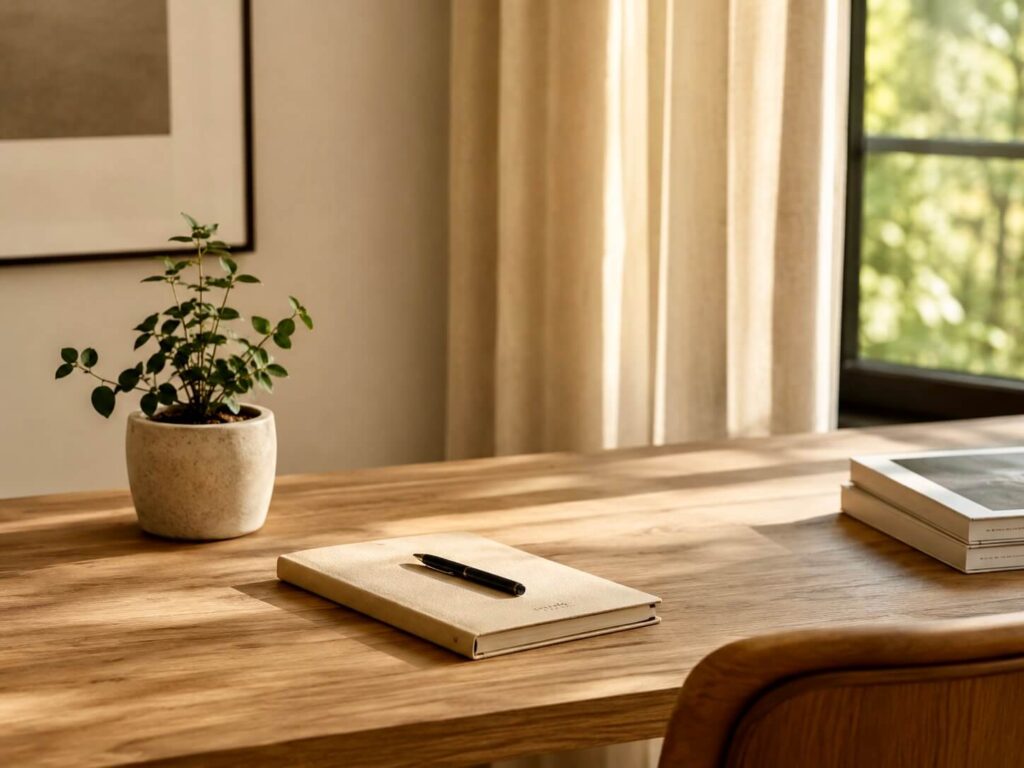
Whether it’s your bedroom, your work desk, or your living room, decide where deep focus needs to happen, and keep the phone out of that space entirely.
3. Schedule Time for Social Media
Let’s be honest — social media matters in modern life. The problem isn’t the platform, it’s the addiction. Used wisely, social media can actually work in your favor.
Personally, I believe scheduling your social media time is the best defense against falling into that addiction loop.
If you’re just starting this journey, begin with 30 minutes a day and gradually taper it down as low as you can. The time you free up becomes space to think, reflect, and build something that matters.
4. Practice Single-Tasking
This is where the science is genuinely striking. Research from Dr. Gloria Mark’s lab has found that recovering focus after an interruption can take almost half an hour — some of her work puts the figure closer to 23 minutes.
Our brains simply aren’t built to run two demanding tasks at once. Multitasking usually means lower-quality output, drained energy, and more errors, not less time spent working.
The fix is simple, if not always easy: do one thing at a time instead of juggling five unfinished ones.
5. Read More Than You Scroll

If you’ve made it this far, you already sense that mindless scrolling drains you. My reason for building Infinite Scroll in the first place is to help people find their way back to mindful living.
Endless scrolling doesn’t recharge you — it squeezes the creative energy out of you and dulls your focus. Swap ten minutes of scrolling for ten minutes of reading and notice the difference in how your mind feels afterward.
6. Protect Your Mornings

Be honest: what’s the first thing you reach for the moment you wake up? For most of us, it’s the phone — often before we’re even fully conscious.
Then comes the favorite app, and the mind is distracted before it’s had a chance to wake up on its own terms.
The first hour after sleep is when your brain is in its most open, associative state — genuinely excellent for creative thinking. Protect that window at all costs. It sets the tone for everything that follows. I have documented a Productive morning routine that actually sticks. Trust me this works wonders if you actually manage to follow it.
7. Train Your Focus Like a Muscle
Your mind needs training the same way your body does. But where training your body means moving, training your mind often means the opposite: sitting still, breathing, and not chasing every thought that shows up. That’s meditation in its simplest form — and in my experience, it’s one of the most reliable ways to build real, durable focus.
Alongside meditation, the Pomodoro Technique is worth trying: 25 minutes of deep, undistracted focus, followed by a 5-minute break, repeated until the task is done.
Reading and end-of-day journaling are two more habits that reinforce the same muscle.
8. Go on an Information Diet
The more you eat, the more weight you carry, and the harder it becomes to lose it. The same logic applies to information. Pay attention to what you consume and how much of it you’re taking in. Balance is the key that unlocks almost everything else on this list.

9. Build a Daily Reflection Habit
Journaling is, in my experience, the single best tool for self-reflection. I’ve kept a journal since 10th grade, and every time I reread an entry from June 11, 2012, or February 14, 2014, I’m struck by how much I’ve changed. Writing down your wins for the day means you get to relive them years later — and that’s a genuinely good feeling.

Before you close the journal each night, ask yourself: how can I make tomorrow more mindful? Then jot down a short to-do list for the next day.
10. Accept That You Can’t Consume Everything
The internet is infinite, and so are the possibilities for the life you could build. But your attention is not infinite — it’s one of the most limited resources you have.
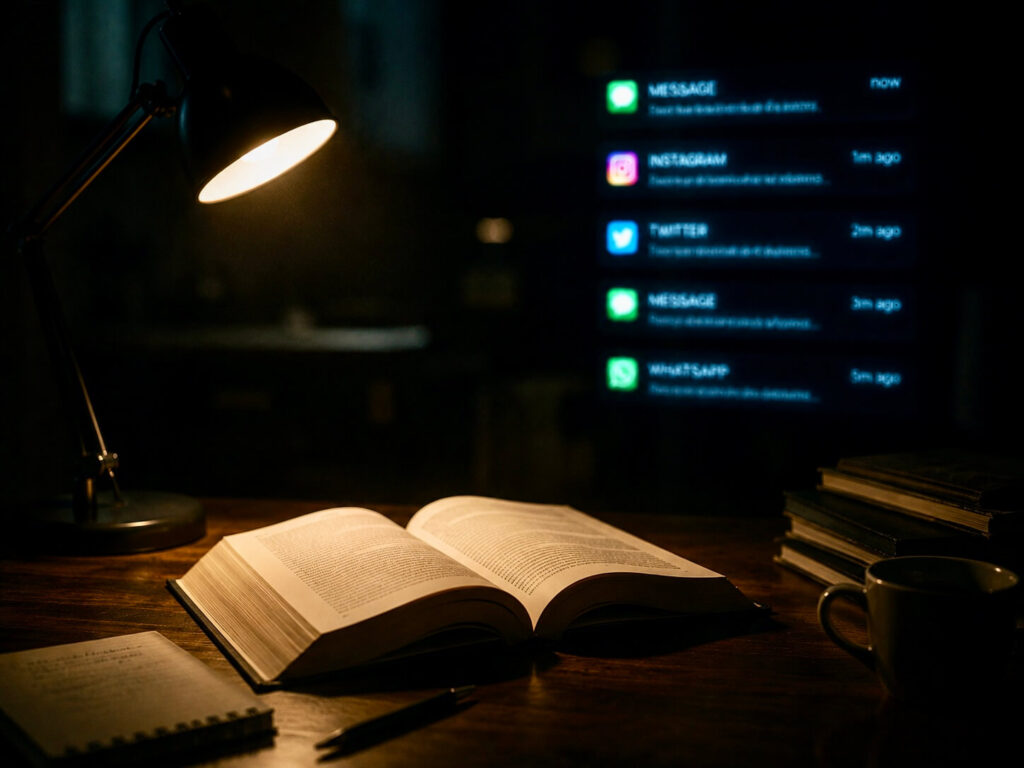
Learning to control it is genuinely difficult in 2026, and it’s likely to get harder over the next decade. That’s exactly why building awareness now matters.
Quick–Reference Summary
• Start your morning without social media
• Silence non-essential notifications
• Read for at least 20 minutes a day
• Reflect and journal each evening
• Single-task instead of multitasking
Takeaway: Technology and social media aren’t the enemy — your uncontrolled attention is. Every notification, every endless feed, every algorithm is competing for the same limited resource: your focus.
Final Thoughts
The people who thrive in 2026 won’t be the ones consuming the most information. They’ll be the ones who choose, deliberately, where their attention goes.
Protecting your attention isn’t about doing less. It’s about making room for what actually matters.