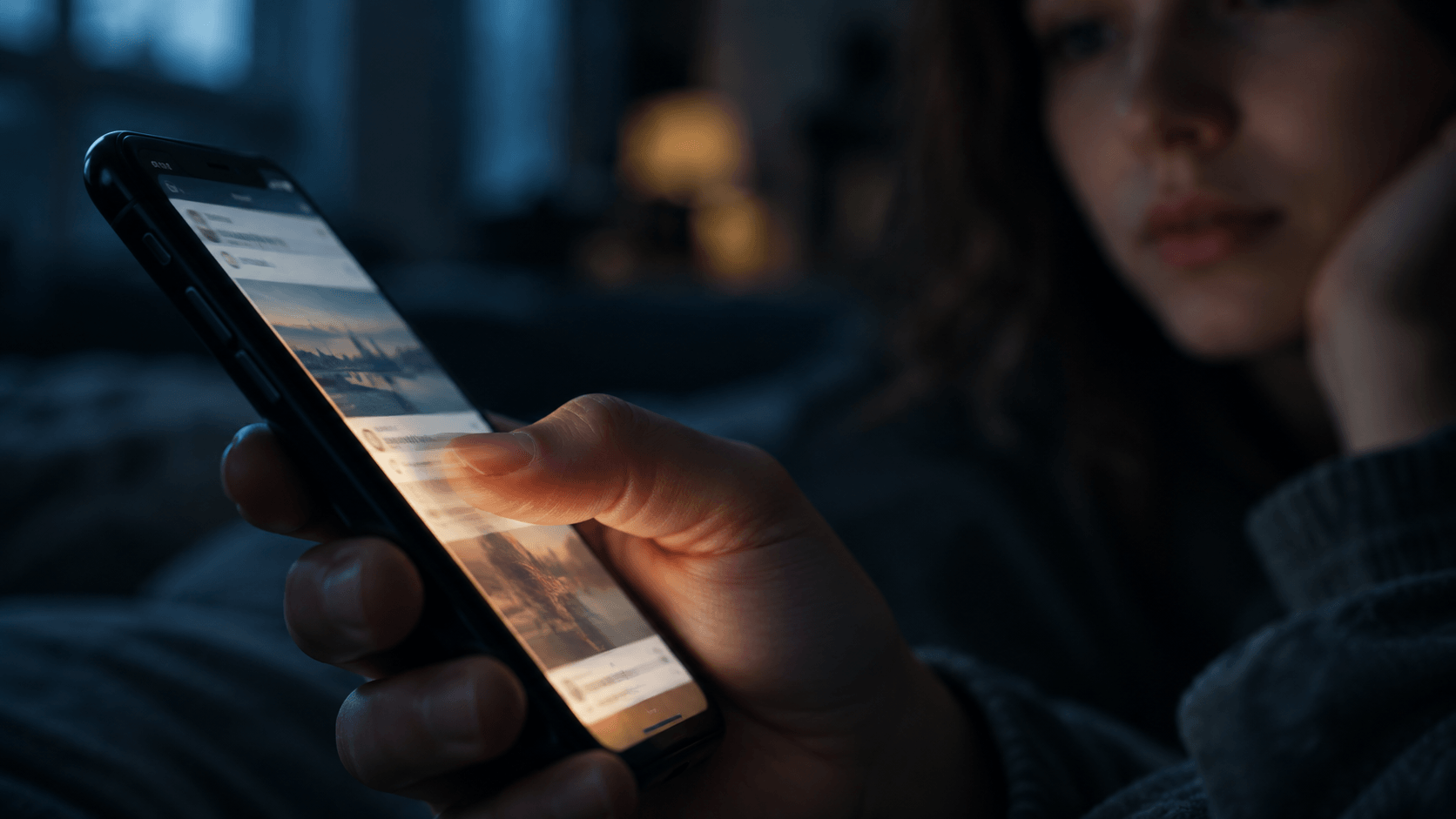
The loop that keeps you checking your phone (and how to break it)
We’re all stuck in a timeless loop. You don’t believe me, do you? Let’s experiment right now. I know you’re probably reading this on your phone, so I challenge you to close the screen this very moment.
Check the time on a clock and don’t touch your phone for the next 10 minutes. How many of us can actually sit with our own thoughts? Let me know if you manage to stay with a bare thought for even one minute.
I tried this with my mom and dad and got a hell of a lot of sticks and stones for it, because apparently neither of them could resist their phones for even 5 minutes.
I think this addiction is worse than most others because no one considers it bad anymore, including your parents. You wait for the kettle and scroll 30 reels until the water boils.
You’re in the elevator and scroll 50 reels until you reach your floor. The situation is so bad that you can’t even take a dump anymore without scrolling through 100 reels.
If you hit one awkward silence at any point in your day, your brain runs for your phone out of survival instinct.
I was stuck in this loop not long ago, and I know you’re one of the rare people who’s actually managed to notice it, which is why I want to help you get out, the same way I got myself out.
The tiny reward that keeps you coming back
To break this loop, you first need to understand why you act this way even when you don’t want to.
As an evolved species, we’re wired for curiosity and dopamine. Our brain is constantly looking for something to be curious about, and it finds ways to get the dopamine it’s chasing.
You feel bored, uncomfortable, restless, and you check your phone because your brain is predicting there might be something interesting waiting.
That uncertainty is what makes you check your phone every time you put it down, and when you do check it, it feels like a reward: cheap dopamine, but dopamine all the same.
One rewarding check makes you willing to try again and again, and reels are built to keep you hooked that way for hours. I don’t think it’s your fault that you’re stuck in this loop.
But the people who know, deep down, that they’re stuck in it and still choose to stay there in the name of “relaxation” are self-sabotaging, whether they admit it to or not.
Boredom became something you think you have to escape
Regardless of what year you were born, think back to before 2015. I remember people coming together every evening for walks or home parties.
When I had nothing to do, I used to stare at the ceiling thinking about how I’d convince my mom to let me go play outside without finishing my homework first.
When she couldn’t decide what to cook for dinner, she’d ask me and my siblings, and we’d end up in long conversations about nothing in particular. The world after 2020 has changed so much. I barely see people actually talking to each other anymore.
Some of us knew how to sit with boredom and let it lead somewhere, but gradually we eliminated every tiny moment of it: standing in line, eating alone, traveling, waiting, lying in bed before sleep, even going to the bathroom.
Instead of letting the mind wander, we fill the silence immediately, and in doing so, we’re not just losing time to our phones, we’re losing our ability to experience an unstimulated mind, which is hurting our creativity and self-awareness.

The phone doesn’t steal your time, it fragments your attention
In this attention economy, every entrepreneur has found an easy way to reach people, and their businesses are built around it. In earlier decades, newspapers and magazines were the only way to advertise.
Now it’s a zero-cost action, which makes it far easier for companies to drive sales and profit. Say you’re at work and get a notification. You glance at your home screen and get back to work because you’re busy, but the thought of what that notification was about keeps haunting you, making it harder to focus. So you check again.
Even when you’re not actively scrolling, part of your attention stays on standby for the possibility that something might happen.
That’s what pulls you away from the work that needs your focus: you struggle to read, can’t finish a movie, keep switching tasks, need background noise just to get through something.
Fighting for your attention back isn’t as hard a battle as it seems, and once you win it, there’s no going back.
Eventually, you start checking your phone to escape yourself
I always knew what I had and what I should be doing. I knew I had skills worth using for other people’s benefit. But working as a flight attendant was so physically demanding that by the time I got home, my energy was close to zero.
Whenever I tried to sit in silence, thoughts like “I could be writing, I could be using my voice for something better” kept haunting me.
So, deliberately or not, I’d grab my phone and open Instagram to escape them. Years later, when I got laid off, the regret of not acting on those thoughts hit me like an arrow to the chest.
If you catch yourself reaching for your phone every few minutes of your day, it’s usually because you can’t sit comfortably with yourself. If you can’t hold your own thoughts for 5 minutes, you’re probably disappointed with your current life in some way, and you need to face that eventually.
The question isn’t why you’re addicted to your phone. It’s why you keep running to it, and what exactly you’re escaping.
Why “just use your phone less” doesn’t work
We’ve all tried deleting Instagram for some number of days, right? I’m curious how long it actually lasted for you. Mine lasted about 2 hours.
The first time I realized Instagram had taken over my mind, body, and soul, I deleted it and told myself I’d stay off it for 7 days. That turned into a loop of freezing the app, deleting it, and setting screen time limits, over and over, and none of it lasted.
Instagram got replaced by YouTube Shorts, and my willpower ran out because nothing else felt quite like Instagram. I missed swapping reels with my best friend, so I reinstalled the app that same evening.
This went on for a few more months before I realized, again, that Instagram had taken over my life.
But that time was different. I was going through a hard phase and realized social media was part of why everything was falling apart, so I decided to take it seriously.
It’s been 3 months now, and I barely remember what it feels like to scroll mindlessly. Getting my willpower back was less about fighting the phone and more about changing the loop.
When the urge to escape or beat boredom shows up, you’ll usually reach for your phone by default. Once you build back your willpower, you start to pause and choose instead.
How to break the loop without becoming a monk
1. Create friction.
Keep your phone physically away from your workspace or bed. Wherever you put it, you’ll still reach for it eventually if it’s on. What works for me is switching it off entirely when I need to focus.
2. Turn off unnecessary notifications.
Notice how fast that pop-up appears the moment you install a new app, asking if you’d like to allow notifications? That’s the trap the developers set for you. Turn them off.
3. Create phone-free transitions.
Most of our attention stays attached to our phones without us noticing. Make sure there’s no phone or device around when you wake up, eat a meal, or go for a walk.
4. Ask “why am I checking this?”
Next time you catch yourself grabbing your phone, pause and ask why. If there’s no real answer, put it back down and return to whatever you’ve been avoiding.
5. Practice boredom on purpose.
Sit with your own thoughts for 5 minutes and see how long you last. You think you check your phone because you’re bored, but often it’s because you don’t want to face yourself.
6. Replace instead of just removing.
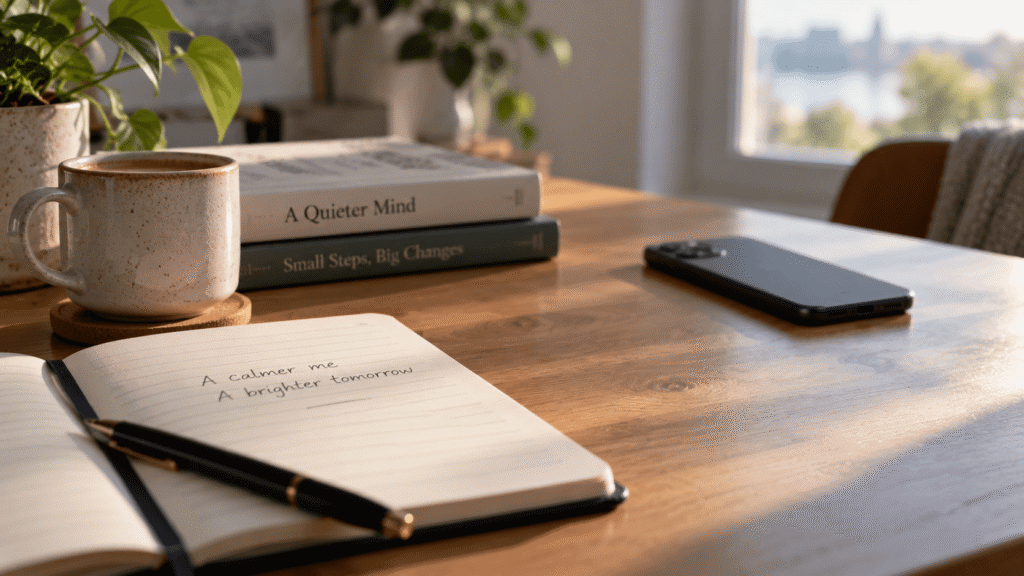
Replace your habit of using phone to something better instead of removing it entirely. Keep alternatives ready: reading, music, stretching, journaling, talking to someone, playing an instrument, going outside.
7. Make social media intentional.
Set aside a specific time each day for it, not right before bed or right after waking up. Set a timer, and when it’s up, get back to real life.
Final thoughts
For those of us raised with technology, I know how hard this is. It’s difficult to resist, to not be controlled by constant notifications and the chase for validation.
For those who remember life before technology, you’re lucky to know what the world felt like when human connection was real and physical.
The problem is we’ve lost the balance between meeting in person and connecting from a distance. We’d rather video call than leave the house to see someone, and that’s what the phone is doing to us.
The goal isn’t to stop using your phone. It’s to stop losing yourself to a tiny machine you think connects you to people and the world, when really it’s pulling you away from both.
We need to reclaim silence, boredom, attention, deep work, conversation, presence, and the ability to sit with ourselves, not the version of us controlled by a machine and the systems businesses built around it, but the one that recognizes it’s being controlled and frees itself.
Freedom from your phone doesn’t mean never touching it. It means the urge to check no longer controls you.







3 Comments