
FOMO isn’t about missing out – it’s about not trusting your own choices
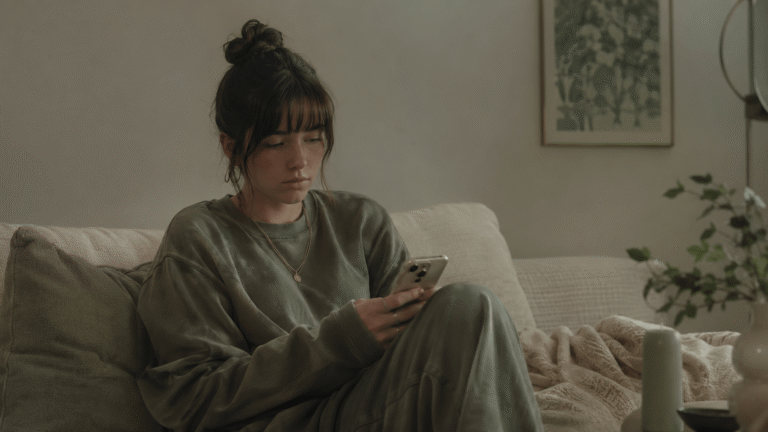
You are in your early 20s and you keep seeing people around you doing new things every single day. One moment you see someone partying and enjoying life, and your brain goes
“Woah! It looks fun, I am just 22, if not now then when?”
So you decide to host a party event with your friends. A few days later you see someone making a million dollars at 22 and there it comes – the FOMO. Now your brain goes,
“Am I doing something wrong? Why is someone making that much money at my age while I am just ‘wasting’ my age, partying here?”
So you decide to “lock in” and do something that you think is going to help you in the long run. Now your friends reach out to you to host a house party event. And because you have decided to “lock in,” you deny them and drown in FOMO when you see their Instagram stories and posts.
If you often find yourself in such situations, this is a heads-up to understand this subconscious habit of yours and work on it. The thing is, it isn’t necessarily that you wanted those other things. It’s that seeing another option made you doubt the option you already chose.
What FOMO actually feels like
The constant feeling of wanting what everyone else has, knows, or is experiencing, and how you are missing out on the so-called “most important things,” is actually you feeling the fear of missing out. FOMO is not always about:

“I want to be there.”
Most of the time, it’s your subconscious mind asking you unnecessary questions like,
“What if I am missing something better?”
“What if everyone knows something I don’t?”
“What if I regret this later?”
This sounds more like doubting yourself, right? Well, that is what it is about. This realization comes a bit later in life. When you are in your early 20s, you are easy to influence. With the modernization of the world, this has become worse.
At this point in life, your frontal lobe is not very developed, so you tend to make decisions on impulse. Just know, the fear right after you make a decision is because you are too young to understand that “whatever you have decided is okay and you must live with it happily.”
But what we actually do is deliberately look at other people’s lives. Just to see how much better they’re doing, and end up doubting ourselves.
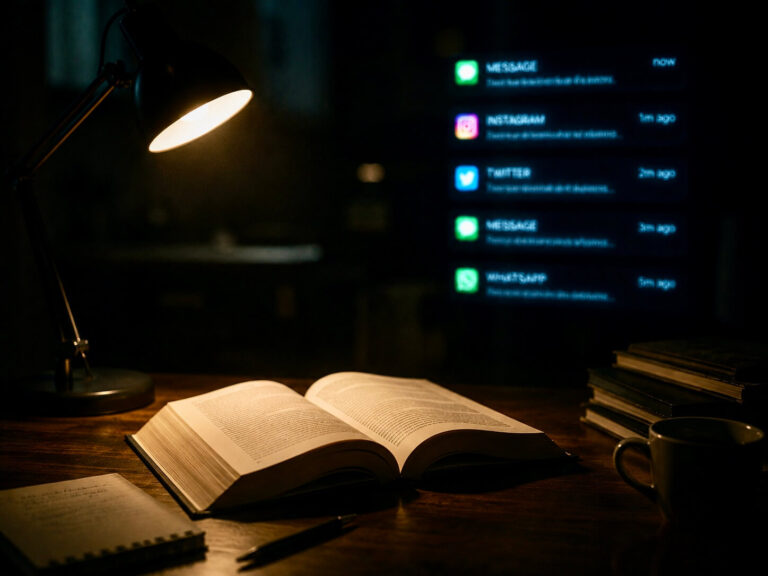
We live in a world that constantly shows us other options.
When I was a kid, the digitalization of this world wasn’t as prominent as it is now. I remember my mom always talking to me about how our neighboring ladies were always out and talking about people, and how she hated to go out.
As a kid I had no idea what she was talking about. But now I understand that every time she said how she hated to go out like other ladies, she was actually feeling the fear of missing out on all the stuff they talked about or did. Deep inside, she knew she could easily get along and go with them and make new friends. But the amount of responsibility she had raising three kids all by herself was something she could never abandon.
I understand how much she sacrificed at such a young age, feeling all those emotions all by herself. For her, the possibility of going out and making friends was an option that always stayed as a FOMO emotion.
The point is, even before the digitalization of the world, people used to see more options than what they had decided to choose. Now, you don’t even need people to tell you how much you’re missing out. Because now we have strangers who pop up on our feed and tell us how far behind we are in life and how they’re all millionaires living in a beautiful skyline luxury high-rise condo.
With constant exposure to different lives every second of every minute, we have subconsciously created this dangerous illusion that if another option looks good, our current option must be wrong.
The internet made us addicted to alternatives
My best friend and I were planning to go on a vacation for seven days. Being flight attendants, we don’t really have to book tickets three months prior. So we had our bags packed and outfits ready, but the only question was, where should we go? So we started searching for destinations we could visit where we’d get to explore and relax at the same time. So we started looking at options.
Bangkok? Paris? No, we’d already been to the Eiffel Tower a couple of times. Zurich, Switzerland? A bit out of budget. China? We had almost agreed on that, until we saw more and more options. It took us from China to Japan, Korea to Vietnam, and finally to visa-free Bangkok, Thailand again.
Every time we ruled out a destination, we researched endlessly before finally deciding on the itinerary. The point is, we don’t just make a choice anymore – we research choices endlessly.
You want to buy a phone, so you watch 20 comparison videos. You’re still young and studying and need to choose a career, so you choose one, then see someone making more money doing something else. You pick a restaurant, but you still check 15 others.
The more information you see, the more you try to seek. The more uncertainty and doubt gets created, leading to more fear about what else you might still be missing. No matter how much you have, or how good your decision actually is, if you don’t trust your decision, you’ll always end up looking at unnecessary options and feeling the FOMO that you could have done better.
FOMO is what happens when you don’t trust yourself after choosing
Half of our lives are driven by the question that keeps haunting our minds every now and then: “Did I make the wrong choice?” Be it your career, the course you’re pursuing, your relationships, or what you’re hoping for in the future, there will always be a moment where you ask yourself this question.
And to be honest, it’s such a personal question that most of us keep it to ourselves. Just to overthink how we could have chosen differently and lived a better life. What we fail to understand is that no matter what option you choose, there will always be something to miss out on, because, as much as we want to deny it, we can’t have it all – every choice has an opportunity cost. And that’s okay. Not every opportunity is meant to be seized.
When you make a decision, the most important thing to hold onto is how much you trust that decision.
Someone who trusts themselves can see other options without immediately abandoning their own. But how we’re wired to not trust ourselves, and to keep self-sabotaging, is one of the reasons we end up in an emotional rut. There’s a way out of this – keep reading and we’ll figure it out.
You don’t need to know you made the right choice.
This is where you can make the mindset shift. We strive so hard to prove that we made the right choice. For example, my mom always tells me how her decisions have benefited us as a family.
That’s a good thing, but the fact remains that whether the decision was good or bad, once you’ve made it, you don’t need to find ways to know if it was right – only time can tell. Until then, you only need to trust that whatever you did was right for that moment, not necessarily in the long run.
Instead of asking, “How do I know this is the right choice?” ask, “Can I make this choice right for me?” Whatever is within your control to make your decision right is what you can do to escape the FOMO trap.
For example, you skip your friend’s plans to do something productive today, instead of feeling guilty that you could have had a good time with her. Think about how you can make this moment more productive. The moment you put that thought into action, you’ll see the difference in your mindset.
The regret will eventually fade, and even if you see your friend’s Instagram story later, you won’t feel how much you missed out on – you’ll feel how much you gained from the choice you made and how right it actually was.
Good decisions aren’t necessarily the ones that produce a perfect outcome. Sometimes, it’s simply a decision you’re willing to take responsibility for.
Stop using other people’s lives to audit your own.
If you’re Asian, you were probably raised comparing yourself to other kids around your age. It’s funny how our parents compare us to kids our own age when we’re children, but the moment we grow up, they stop considering age at all and just compare our lives to someone way older than us.
I don’t know if it works the same way in the West, but at some point, most of us are wired to use other people’s success, achievements, and timelines to audit our own lives. Some of us think that’s just how it is – that we’re supposed to compare ourselves to the people around us to see growth or self-development.
All that leads to is more stress, anxiety, FOMO, pressure, and, most importantly, a fear of stagnation.
To be honest, I was in this exact stage of life not so long ago. The timeline anxiety was hitting me hard, especially after I lost my only source of income. I was questioning my worth and my choices so much that every decision felt like the wrong one.
But that’s the point – it wasn’t me thinking all this, it was my brain, taught by society and its terms about what’s right and what’s wrong. This kind of self-awareness only happens when you cut off the outside world and look within.
That’s exactly what got me into meditating – not much, only five minutes a day, but it’s been life-changing. It made me realize I’m not missing out on anything. Neither are you. We’re exactly where we need to be, making the choices we think are right for us, or working to make them right.
Someone else’s success isn’t evidence of your failure – it’s evidence that success exists, and that you can reach it too.
How to build self-trust and reduce FOMO
After self-sabotaging for years, I finally learned how to trust myself again. It wasn’t a one-day process – it took these practices:
1. Make decisions with the information you have.
Nothing will ever be certain in life. Most of the time you’ll have to make decisions based on intuition and whatever little information you have, and that’s okay. What matters more is making peace with it once you’ve made it.
2. Stop reopening closed decisions.
If you keep failing to make peace with a decision, you end up in a spiral that leads to FOMO and every unnecessary emotion that comes with it. So breathe in, hold it for four seconds, breathe out, and say, “I made the right choice.” There’s no “what if.”

3. Practice letting things pass.
If something seems tempting and you go for it, only to realize later it wasn’t for you, that’s exactly why you need to learn to let things pass. Not every opportunity needs to be taken. Sometimes self-control is simply saying, “That’s great, it’s just not for me right now.”
4. Limit comparison.
The more you watch someone doing well, the more you notice everything you think you should have too. We all have different timelines. Understanding this, and accepting that you don’t need to be like someone else to get what they have, is the way to a more peaceful life. Instead of comparing, learn to look within, figure out what you truly want, and be yourself.
5. Remember that every choice has an opportunity cost.
No matter how many times you’ve watched someone online say, “Yes, you can have it all,” what they never mention, because it’s too inconvenient to say out loud, is that every choice costs an opportunity. Some things will always be missed no matter how hard you try. That’s the price of having direction.
The goal isn’t to stop missing out
As an ex-flight attendant, I can confirm this: if you get something you truly want, you will always lose something else you also truly wanted.
I missed my mom’s birthday four years straight. Yes, I truly wanted to be there. But I also wanted to get her the gold necklace she’d been talking about, and giving her that was something I truly wanted too. So I chose to get her that gift, which meant I couldn’t be there for her birthday because I had to work.
What mattered to me was the happiness she felt when she saw the gift. That made me realize you will always miss out on things – you just need to be okay with it and trust your own choices more than you deal with the fear.
The goal is to become comfortable with the fact that you’re allowed to choose one life and let other possibilities remain possibilities.
Final thoughts
If you feel this fear despite knowing all of this, it’s okay. Even I feel FOMO from time to time. We live in a world where it’s really hard to stick to one emotion forever. Our emotions and feelings are highly volatile and will change over time, with more and more life experience.
And no matter what situation you’re in, when you have to make life decisions, even minor ones, know that the real paradox isn’t knowing you made the perfect choice.
It’s knowing you might be wrong, you might change your mind, there might be something better out there, and you are, and always will be, capable of choosing.
Self-trust doesn’t mean believing every decision you make will be right. It means believing you’ll be okay even if it isn’t.








One Comment